- 2030 Project
- Posts
- Unchecked: Iran, Epstein, and the Georgia We're Fighting For
Unchecked: Iran, Epstein, and the Georgia We're Fighting For
In partnership with


This Week in Georgia
This week is candidate qualifying week in Georgia and we have seen Georgia Democrats qualifying outstanding candidates at near record numbers. We will be excited to share with you our key five State House battleground districts in the coming weeks - stay tuned!
Tomorrow is Crossover Day in the Georgia Legislature, which means it is the deadline for bills to pass their chamber of origin if they want the chance at becoming law by the end of the legislative session. We will have a full rundown on the legislative session in next week’s edition.
Tuesday’s elections marked the start of midterm season as Texas, North Carolina, and Arkansas all held primary elections. The Texas senate primaries were of extra note as on the Democratic side State Representative James Talrico triumphed over US House Member Jasmine Crockett. However the GOP primary moved on to a runoff as incumbent Senator John Cornyn only narrowly outpaced Texas Attorney General Ken Paxton, with neither gaining a majority. The upcoming runoff gives Democrats a real chance at flipping this senate seat as Republicans succumb to infighting and wasted spending, while key Democrats have united behind Talrico.
Meanwhile back in Georgia this week, a jury voted to convict the 2024 Apalachee High School suspected shooter’s father, Collin Gray, of murder for giving his son an assault rifle. This is a powerful precedent that parents hold responsibility for the actions of their children in mass casualty events. The trial for the suspected shooter hasn’t yet begun.
Georgia Senators Sound the Alarm on Trump's Iran War
The U.S. and Israel conducted joint strikes on Iran on Saturday, February 28. Trump and his administration carried out these illegal attacks to neutralize "potential threats from Iran and its regime". These strikes are reminiscent of the U.S. attacks on Iran earlier this summer to neutralize the potential "nuclear threats" that Iran possessed. But where does the U.S. go from here?
Ideally, Congress would reassert its power with the War Powers Resolution Act to terminate the conflict. The War Powers Resolution Act of 1973 is a federal law created to limit the U.S. president's power to enter the country into armed conflict without congressional approval. However, Republicans and one Democrat in the Senate voted against stopping this costly presidential war on Tuesday. With Trump's unpredictable actions and what seems to be an unlimited amount of presidential power, many U.S. citizens are concerned about whether his war actions endanger our military and country itself.
Amidst the conflict in Congress and Iran, Georgia Democratic senators Raphael Warnock and Jon Ossoff condemned the president's actions.
"...Let's be clear: the Iranian regime is brutal and destabilizing. It cannot be allowed to obtain a nuclear weapon. But the President has not explained why diplomatic talks that were underway this week are no longer viable and diplomacy no longer available. Instead, he has said in word and deed that this is war, a power that the constitution reserves for Congress alone…" - Raphael Warnock
"...The President has presented no evidence that Iran or its nuclear program — which he falsely claimed to have 'obliterated' — pose an imminent threat to the United States, or that diplomacy was exhausted. Iran's support for terrorism and uranium enrichment have long destabilized the region. But sending American forces into harm's way should only ever be a last resort…" - Jon Ossoff
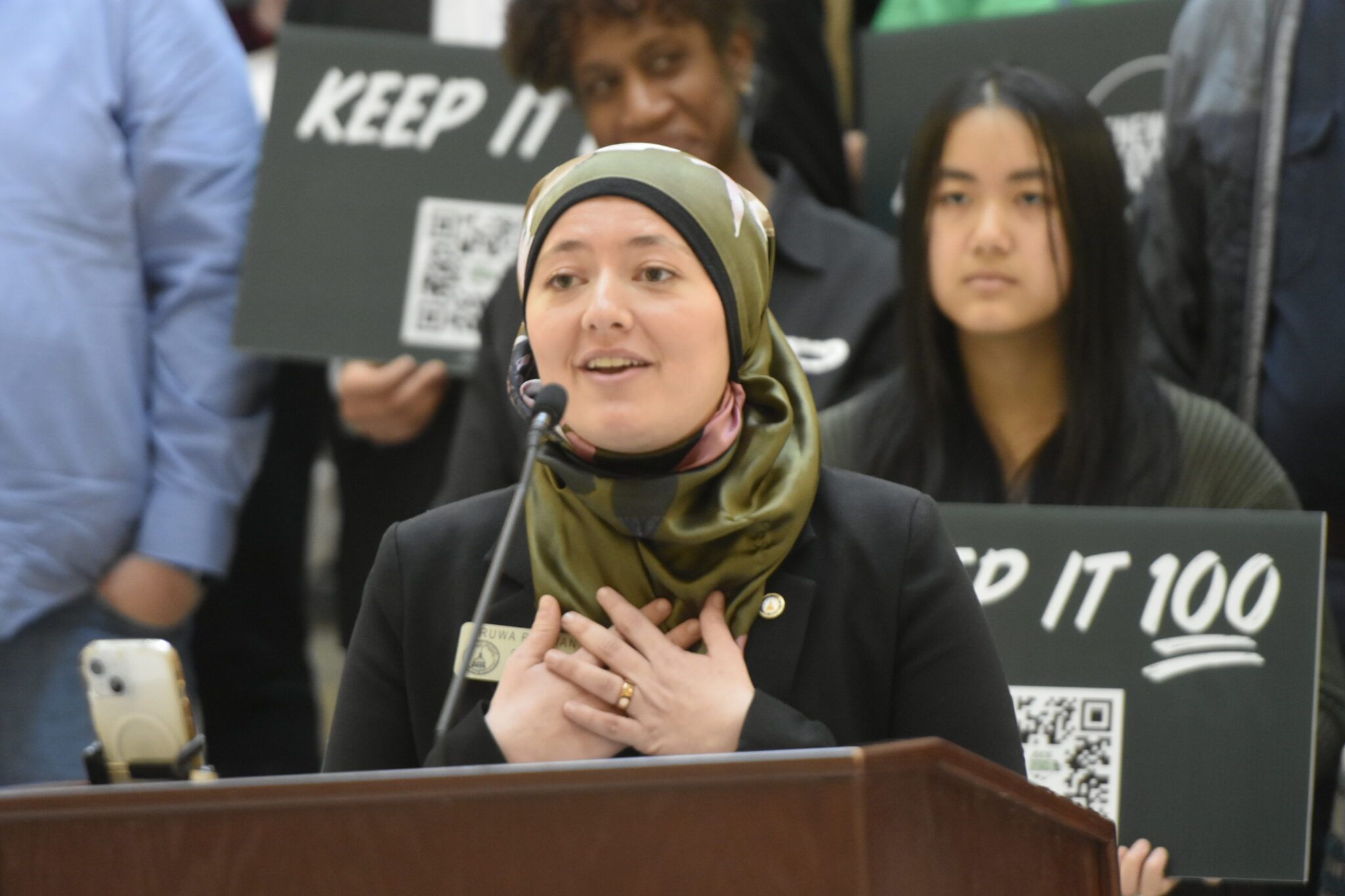
Ruwa Romman Left. Her Message Didn't.
As the 2026 midterms approach, Democrats across the country are hoping to ride a big blue wave. In Georgia, that hope is harder to feel. The Governor's race has been quiet as no candidate on either side has emerged as a true contender. The question is whether this is a message problem or a personality problem? The answer is probably both.
In New York City, Zohran Mamdani ran a campaign that was specific, direct, and impossible to ignore. He didn't just talk about affordability, he was open about how he planned to enact his plans: a 9.5% property tax on commercial properties and a 2% tax increase on incomes over one million dollars. He showed up on social media, spoke plainly, and connected with working people. He was deeply informed, charismatic, and genuine.
James Talarico ran a similar playbook in Texas. Both candidates proved that clarity wins. Senator Jon Ossoff remains incredibly popular in our own state with his founding message on the economy, healthcare, and infrastructure. While every Democratic candidate running has mentioned tabletop issues like healthcare and affordability, they lack the energy to convey this in an enthusiastic way.
We have had a candidate in the governor’s race capable of that same energy. State Rep. Ruwa Romman, the first Muslim woman elected to the Georgia State House, built her campaign around abortion access, voting rights, and civil rights protections. She felt she had no path to the governorship and shifted her focus to the State Senate. However her exit message is worth sitting with: "This campaign was never about me or any one person. This campaign was about showing the promise of our state and fighting for a Georgia we can afford and where we belong."
Mamdani also understood something crucial: economic rights and civil rights are inseparable. The Freedom Budget, championed by Dr. Martin Luther King Jr. in 1966, made this case through full employment, guaranteed wages, and public housing investment. Working-class politics cannot exist without commitment to LGBTQ+, BIPOC, and immigrant communities. These are not competing priorities.
The Democratic candidates running for governor have an opportunity in the months ahead to sharpen that message and generate the kind of energy that can carry down the ballot into competitive legislative races. With Ruwa Romman no longer in the race, it is imperative that one of the remaining candidates steps up into this lane of prioritizing working class politics.
If Democrats want to win in 2026, the path forward is straightforward: meet voters where they are, speak plainly about the economic pressures families face, and offer a vision for a Georgia where working people can finally get ahead. This is the kind of message that can unite the coalition needed to win statewide races while also breaking through in the handful of battleground State House districts that will decide who actually governs Georgia.
The Georgia Recorder
The Epstein Files: Justice Abroad, Impunity at Home
As the Department of Justice continues releasing millions of documents tied to Jeffrey Epstein, one pattern has become impossible to ignore: the rest of the world is holding people accountable. The United States is not.
Since the Epstein Files Transparency Act set this process in motion in November 2025, investigations have launched in nearly a dozen countries. In the United Kingdom, former Prince Andrew Mountbatten-Windsor was arrested on February 19th for his ties to Epstein. Abroad, exposure means consequences. Here, it means deflection.
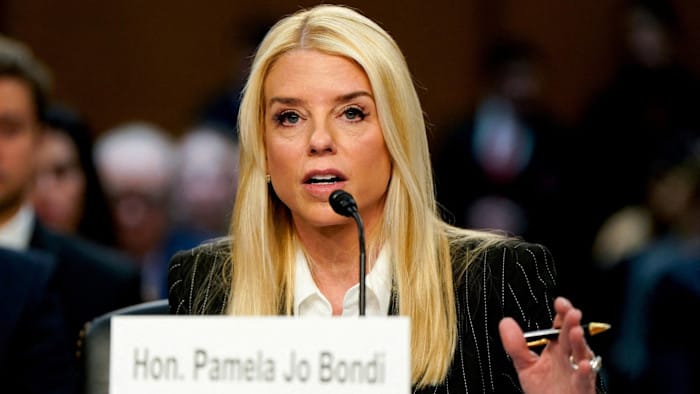
That deflection has a face: Attorney General Pam Bondi. When pressed on the DOJ's handling of Epstein documents, particularly files pertaining to President Trump, Bondi responded to investigators with, "But the Dow is over 50,000 right now. That's what we should be talking about." The House Oversight Committee, in a 24-19 vote, subpoenaed Bondi this week amid accusations of document mishandling. Days later, more than 47,000 files were quietly taken offline, with the DOJ citing "further review." The pattern is clear: slow-walk, censor, distract.
Democrat Ro Khanna of California and Republican Thomas Massie of Kentucky have both publicly criticized the DOJ's withholding of Trump-related files. But meaningful accountability remains blocked because the GOP, as a party, is protecting its own.
This week's testimony from Bill and Hillary Clinton underscored just how differently accountability lands depending on who's asking. Clinton stated he had "no knowledge" of Epstein's crimes, describing their relationship as "transactional" and centered on economics and global affairs. Hillary Clinton, growing visibly frustrated, was met with questions by Lauren Boebert (R-CO) referencing the long-debunked Pizzagate conspiracy. Clinton responded, “I can’t believe you’re even referencing it,” and reminded her the conspiracy had driven a man to bring a gun into the Washington, D.C. restaurant falsely implicated.
That is the strategy. Keep the focus anywhere but the President. Take files offline. Ridicule the investigation. Run out the clock.
At its core, this moment is a test of whether the United States still believes in equal justice under the law. Other nations have shown a willingness to pursue the truth wherever it leads. In Washington, the response has been to delay, distract, and protect those at the top. That reality leaves one unavoidable conclusion: if Americans want a government willing to follow the evidence and hold the powerful accountable, it will require voters to change who holds power. In 2026, that means Democrats must flip the House and, if possible, the Senate because without new leadership, the truth buried in the Epstein files may never fully come to light.
Financial Times


Until next time,

Fund year-round organizing. Flip the GA State Legislature.
Smart starts here.

You don't have to read everything — just the right thing. 1440's daily newsletter distills the day's biggest stories from 100+ sources into one quick, 5-minute read. It's the fastest way to stay sharp, sound informed, and actually understand what's happening in the world. Join 4.5 million readers who start their day the smart way.