- 2030 Project
- Posts
- Georgia 2025: A Year in Review
Georgia 2025: A Year in Review
In partnership with


Georgia 2025: A Year in Review
Before we dive into the policy fights, election results, and power shifts that defined 2025 in Georgia, we’re keeping one tradition alive — ending the year with a little levity and community.
Which Holiday Movie is Better? |
(We’ll let the results speak for themselves — and settle absolutely nothing.)
🍑 This Week in Georgia:
As 2025 comes to a close, December’s observance of World AIDS Awareness Month offers an important reminder that many of Georgia’s biggest challenges didn’t start this year — and won’t be solved without sustained political will.
Georgia continues to face a serious HIV/AIDS public health crisis. The state consistently ranks among the highest in the nation for new HIV diagnoses and overall prevalence. In 2023, Georgia recorded approximately 23.1 new HIV diagnoses per 100,000 residents, more than double the national average. Georgia also remains near the top nationally in the number of people living with HIV, with several metro Atlanta counties posting some of the highest rates in the country.
These numbers underscore why policy decisions at the state level matter so deeply. Expanded access to prevention tools like PrEP, increased funding for public health infrastructure, and a serious commitment to health equity are not abstract goals — they directly affect lives across Georgia. As we reflect on 2025 and look ahead to 2026, World AIDS Awareness Month is a reminder that the stakes of state governance extend far beyond elections alone.
Georgia’s Housing Crisis: What’s at Stake
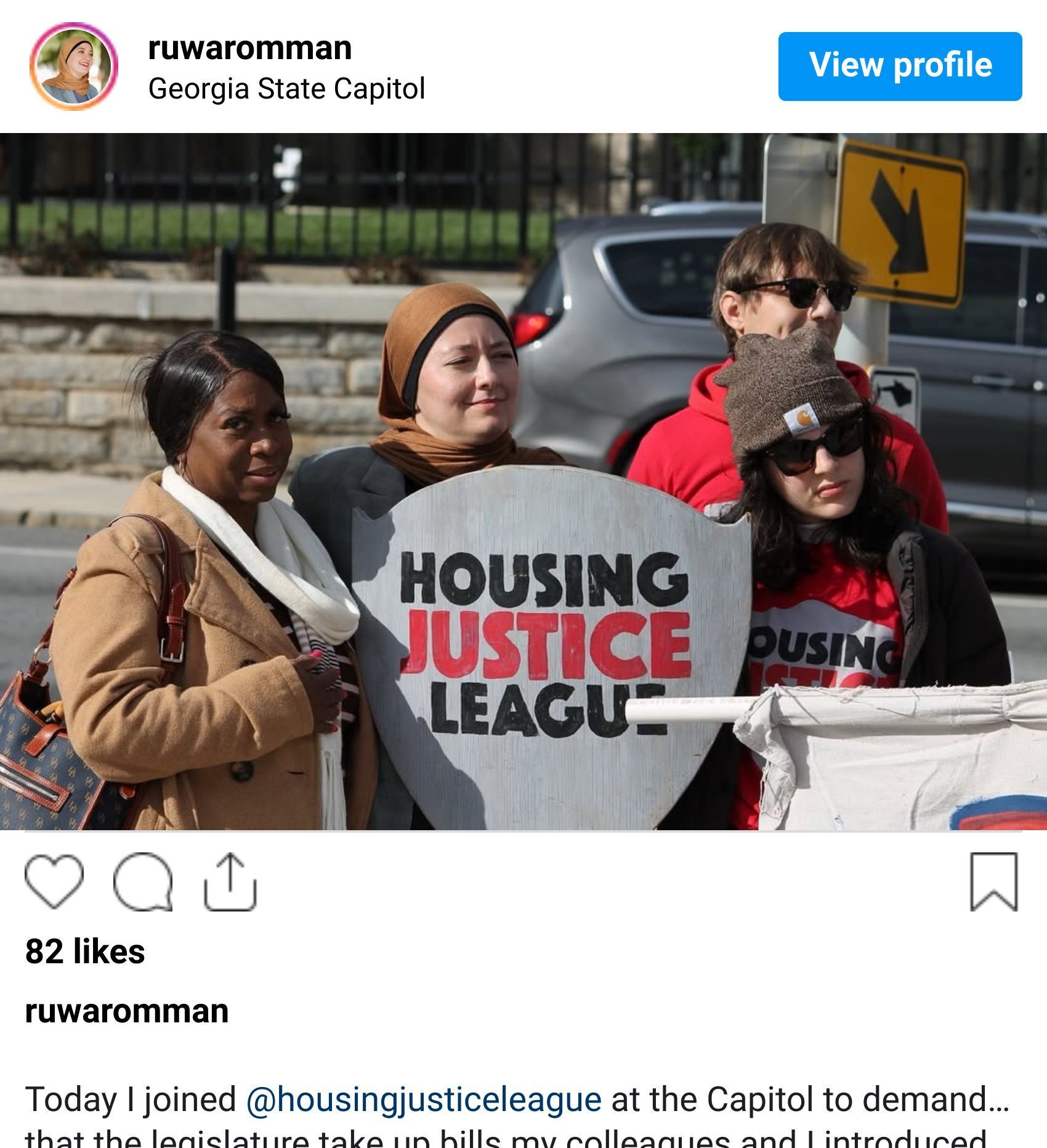
Housing affordability emerged as one of Georgia’s most urgent and unresolved challenges in 2025. Across the state, working families are increasingly priced out of both rental and homeownership markets. According to reporting from The Atlanta Journal-Constitution, Georgia faces a shortage of roughly 35,000 rental units and a 41,000-unit deficit in the homeowner market. With Georgia’s population projected to reach 11.8 million by 2030, these gaps are not abstract projections — they represent tens of thousands of Georgians at risk of housing insecurity.
At the same time, consolidation in the housing market has accelerated. As of November 2024, the AJC reported that seven corporations own more than 51,000 single-family rental homes in the Atlanta region alone. This concentration of ownership has real consequences: when institutional investors dominate the market, rents rise, competition shrinks, and affordability slips further out of reach. The result is a housing system that increasingly serves upper-income residents while leaving low- and middle-income families with fewer stable options.
During the 2025 legislative session, Georgia House Democrats attempted to address this imbalance through House Bill 555, the Georgians First Residential Property Protection Act. The bill would have limited large institutional investors to 2,000 single-family homes or 10 multifamily properties, aiming to curb market concentration and protect renters and homeowners alike. Despite growing public concern over housing costs, the bill never reached the House floor for a vote.
As we close out 2025, the housing crisis remains unresolved — but not unaddressable. When the next legislative session begins in January 2026, HB 555 will once again be eligible for consideration. Understanding the stakes is the first step. Holding lawmakers accountable for whether they choose to act is the next. To make your voice heard, contact your representative and ask them to vote “YES” on House Bill 555.
Key Wins and Losses in Georgia’s 2025 Legislative Session
Georgia’s 2025 legislative session delivered a familiar mix: incremental progress in some areas, sharp setbacks in others, and several high-impact proposals left unresolved.
What Passed
Several bills affecting children and students advanced with bipartisan support. These included HB 340, which restricts cellphone use in classrooms; HB 136, establishing a $250 child tax credit; and HB 268, which strengthens school safety by mandating access to mental health counselors. Senate Bill 123, addressing chronic absenteeism, also passed — aiming to keep students with frequent absences in school rather than pushing them toward expulsion.
At the same time, the legislature passed Senate Bill 1, a measure prohibiting transgender girls from participating in girls’ school sports. The bill marked a significant setback for LGBTQ+ youth in Georgia, reflecting a broader push by Republican leadership to advance exclusionary policies at the state level.
Lawmakers also approved the 2026 Fiscal Year Budget, which includes funding for a private-school voucher program and increased allocations for the Department of Corrections. Additional legislation sent to Governor Kemp’s desk addressed a range of issues, including intellectual disability and the death penalty (HB 123), access to IVF treatment (HB 428), and the Survivor Justice Act (HB 582).
What Didn’t Pass
Just as telling were the bills that stalled or failed outright.
HB 94, which would have revived the Consumer Utility Counsel to advocate for ratepayers, did not advance — leaving Georgians without a dedicated watchdog as utility costs continue to rise.
The Okefenokee Protection Act (HB 561), which would have blocked mining on Trail Ridge near the Okefenokee Swamp, failed to pass despite widespread public concern.
HB 50, which would have fully expanded Medicaid in Georgia, once again stalled in the legislature.
HB 39, a bill that sought to prohibit coverage of gender-affirming care under state health benefit plans, also failed to advance — preventing further rollbacks of healthcare access this session.
The Bigger Picture
Taken together, the 2025 session underscored a central reality in Georgia politics: while incremental progress is possible, Republican control of the legislature continues to block transformative action on affordability, healthcare, and consumer protection. As the state heads into 2026, these legislative outcomes make clear that elections — particularly at the State House level — remain the primary lever for meaningful change.
Shifting Power in Georgia: 2025 Election Highlights
Georgia voters didn’t just cast ballots in 2025 — they shifted power inside institutions that directly shape affordability, accountability, and everyday life in the state. While many of these races flew under the national radar, their impact will be felt for years.
The Georgia Public Service Commission
In one of the year’s most consequential developments, Democrats won two seats on the Georgia Public Service Commission, defeating Republican incumbents Tim Echols and Fitz Johnson. These victories marked the first time in nearly two decades that Democrats have won statewide, non-federal offices in Georgia.
Once the new members are sworn in, the PSC will shift from an all-Republican body to a 3–2 Republican majority. While Republicans still control the commission, the change breaks a long-standing monopoly over an institution that directly regulates electricity rates, utility planning, and energy policy.
Legislative and Local Power Shifts
At the legislative level, Democrats scored another critical win in December 2025, flipping Georgia State House District 121 in a special election. Eric Gisler’s victory in Athens and Oconee Counties marked a rare Democratic gain in a district that had previously voted strongly Republican, reinforcing a broader pattern of Democratic overperformance in off-cycle elections.
Local races also reflected heightened competition. In Atlanta, leadership changes — including Marci Collier Overstreet’s election as City Council President — signaled shifting dynamics in city governance that will shape policy decisions through at least 2029.
Why These Shifts Matter
Taken together, these results underscore an essential truth of Georgia politics: power is not held in one place. Regulatory commissions, state legislatures, and local governments all shape cost-of-living outcomes, public accountability, and long-term policy direction. In 2025, voters made clear they are willing to contest — and in some cases flip — institutions that once seemed politically immovable.
As Georgia heads toward 2026, these shifts offer both a signal and a strategy: meaningful change often begins outside the spotlight, long before it reaches the top of the ballot.
A Dark Year, and a Growing Resistance
As the first year of Donald Trump’s second term comes to a close, the national political environment has been as destabilizing as many feared. The past year has been marked by aggressive efforts to hollow out federal institutions, the politicization of immigration enforcement, increasing pressure on independent media and private-sector actors, and a judiciary that has too often failed to serve as a meaningful check on executive overreach. Major policy decisions — from sweeping tax legislation to tariffs and the expiration of key healthcare subsidies — have further concentrated wealth at the top while increasing costs for working families.
And yet, 2025 was not defined by acquiescence alone. Across the country, Americans responded with sustained civic resistance — from record-setting “No Kings” protests to competitive special elections and off-year contests that revealed a shifting political mood. In November, Democrats regained a governing trifecta in Virginia, expanded legislative majorities in New Jersey, and flipped seats in special elections nationwide. Taken together, Democrats outperformed their 2024 baselines by double digits across 2025 elections — a level of overperformance comparable to the environment that preceded the 2018 midterm wave.
These results don’t guarantee future outcomes. But they do demonstrate that opposition to MAGA governance is real, organized, and increasingly effective — even in low-turnout, off-cycle elections.

Why Georgia Matters in 2026
All of this brings the focus back to Georgia.
The 2026 election cycle will be one of the most consequential in a generation. Nationally, Democrats have a real opportunity to contest control of both chambers of Congress, limiting the damage a second Trump term can inflict and restoring basic checks and balances. Governors’ races across the country — including in Georgia — will also shape whether states can resist harmful federal policies and prevent another decade of extreme gerrymandering.
Georgia, in particular, sits at the center of this fight. Senator Jon Ossoff is up for reelection, making him the only Democratic senator on the ballot in a state carried by Trump. Since taking office, Ossoff has emerged as a consistent voice against corruption and government abuse. His reelection is not just important for Georgia — it is essential to any realistic Democratic path to holding or expanding Senate control in 2026.
At the state level, the stakes are just as high. Republicans have held unified control of Georgia’s government since 2005. During that time, they have restricted abortion access, weakened labor protections, refused to expand Medicaid, and prioritized tax cuts that disproportionately benefit the wealthiest Georgians. Breaking that grip will not happen overnight — but it starts with targeted, strategic gains.
Flipping the governor’s mansion would give Democrats veto power over extreme legislation and future gerrymandered maps. Flipping additional State House seats would move Georgia closer to a legislature that reflects the state’s electorate. The 2025 victory in State House District 121 was not an anomaly — it was a proof point. It showed that focused organizing, even in difficult terrain, can change outcomes.
As this year-in-review makes clear, the path to durable power in Georgia runs through sustained effort, disciplined strategy, and early investment. 2025 laid the groundwork. 2026 will determine whether it pays off.
2026 is Our Moment
As this year in review shows, the stakes couldn’t be clearer. From stalled legislation in Atlanta to power grabs in Washington, the consequences of who governs — and who doesn’t — are real. But 2025 also showed something else: when people show up, organize, and focus their energy, the balance of power can shift.
2026 is the moment when that momentum is either locked in — or lost. In Georgia and across the country, progress depends on participation, persistence, and refusing to sit out the fights that matter most.
As we head into the holidays, let’s carry both the urgency and the optimism of this year with us. Our voices still matter. Our votes still matter. And the work ahead is very much worth it.
Happy Holidays from the 2030 Project!


Until next time,

Fund year-round organizing. Flip the GA State Legislature.
Amazon Prime members: See what you could get, no strings attached

If you spend a good amount on Amazon, this card could easily be worth $100s in cash back every year. And — even better — you could get approved extremely fast. If approved, you’ll receive an insanely valuable welcome bonus deposited straight into your Amazon account, ready to use immediately.
You also don’t have to jump through any hoops to get this bonus. No extra work or special spending requirements. Get approved, and it’s yours.
This might be one of the most powerful cash back cards available, especially considering how much most people spend on Amazon each month. It gives you the chance to earn cash back on the purchases you’re already making, turning your routine shopping into something that actually pays you back.
If you shop at Amazon or Whole Foods, this card could help you earn meaningful cash back on every purchase you make. But this offer won’t last forever — and if you’re an Amazon Prime member, this card is as close to a no-brainer as it gets.
Amazon Prime members: See what you could get, no strings attached